Description
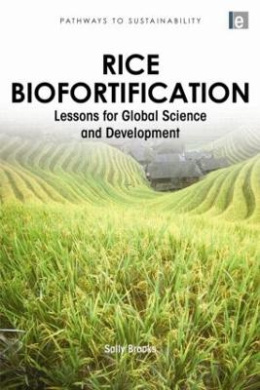
Biofortification – the enrichment of staple food crops with essential micronutrients – has been heralded as a uniquely sustainable solution to the problem of micronutrient deficiency or ‘hidden hunger’. Particular attention is being focussed on biofortification of rice – the world’s most important food crop – and large amounts of effort and funding are being invested in this ‘silver bullet’ solution. Through an in-depth analysis of international rice biofortification efforts across the US, Philippines and China, this book provides an important critique of such goal-oriented, top-down approaches. These approaches, the author argues, exemplify a model of global, ‘public goods’ science that is emerging within complex, international research networks. It provides vital lessons for those researching and making decisions on science and research policy, showing that if this model becomes entrenched, it is likely to close down the options on technological solutions, channelling research towards top-down models at the expense of more incremental approaches that respond to local diversity and the complexity and uncertainty of the way people interact with their environment. The author proposes a series of key changes to institutions and practices that might allow more diverse and context-responsive alternatives to emerge. These issues are particularly important now with increasing concerns over food security and as donors and policy makers are increasingly committed to ambitious visions of ‘impact at scale’ across many development-aimed technological issues – visions which may never become a reality and may preclude more effective pathways from being pursued. It is published in association with the Economic and Social Research Council (ESRC).