Description
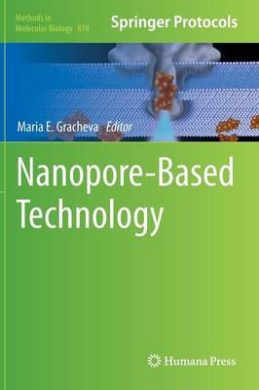
Nanopores are vital biological features, described as tiny holes in cellular membranes used for recognition and transport of ions and molecules between compartments within the cell, as well as between the extracellular environment and the cell itself. Their study, ever growing in esteem, leads toward the promise of ultra-fast sequencing of DNA molecules with the ultimate goal of building a nanoscale device that will make rapid and cheap DNA sequencing a reality. In Nanopore-Based Technology, expert researchers in the forefront of the field explore the cutting-edge of nanopore technology for single molecule sensing, detection, and characterization. Divided into four convenient parts, this volume covers single molecule characterization techniques utilizing biological pores, methods for biomolecule characterization with nanoporous artificial membranes, computational studies of the biomolecule confined within the nanopore environment, as well as techniques that use novel materials in conjunction with nanopore sensing. Written for the highly successful Methods in Molecular Biology(TM) series, this work provides the kind of detailed description and implementation advice that is crucial for achieving optimal results. Authoritative and state-of-the-art, Nanopore-Based Technology serves as an excellent representation of the present-day available techniques for biomolecule characterization with nanoporous membranes in order to guide researchers toward developing the next generation of technologies for fast and cheap DNA sequencing with practically no limitations on the read lengths. Part I: Single Molecule Characterization with Biological Nanopores 1. Detecting and Characterizing Individual Molecules with Single Nanopores John J. Kasianowicz, Joseph E. Reiner, Joseph W.F. Robertson, Sarah E. Henrickson, Claudio Rodrigues, and Oleg V. Krasilnikov 2. Protein Sensing with Engineered Protein Nanopores Mohammad M. Mohammad and Liviu Movileanu 3. Measurements of DNA Immobilized in the Alpha-Hemolsyin Nanopore Robert Purnell and Jacob Schmidt 4. DNA Unzipping and Protein Unfolding Using Nanopores Cline Merstorf, Benjamin Cressiot, Manuela Pastoriza-Gallego, Abdel Ghani Oukhaled, Laurent Bacri, Jacques Gierak, Juan Pelta, Loc Auvray, and Jrme Math Part II: Bio-Molecule Characterization with Artificial Membranes 5. DNA Characterization with Ion Beam Sculpted Silicon Nitride Nanopores Ryan C. Rollings, David S. McNabb, and Jiali Li 6. DNA Sequencing by Nanopore-Induced Photon Emission (SNIPE) Alon Singer, Ben McNally, Ruby Dela Torre, and Amit Meller 7. Optical Tweezers for Mechanical Control Over DNA in a Nanopore Ulrich F. Keyser 8. Analyzing Single DNA Molecules by Nanopore Translocation Lorenz J. Steinbock and Ulrich F. Keyser Part III: Theory and Computer Simulations for Single Molecule Characterization with Protein and Solid-State Nanochannels 9. DNA Characterization by Transverse Electrical Current in a Nanochannel Massimiliano Di Ventra, Matt Krems, James Wilson, and Yuriy V. Pershin 10. Optimization of the Molecular Dynamics Method for Simulations of DNA and Ion Transport through Biological Nanopores David B. Wells, Swati Bhattacharya, Rogan Carr, Christopher Maffeo, Anthony Ho, Jeffrey Comer, and Aleksei Aksimentiev 11. Polymer Translocation Through an Electrically Tunable Nanopore in a Multilayered Semiconductor Membrane Dmitriy V. Melnikov, Alexey Nikolaev, Jean-Pierre Leburton, and Maria E. Gracheva Part IV: Novel Materials and Devices for Bio-Molecular Characterization 12. Graphene Nanopore Devices for DNA Sensing Chris A. Merchant and Marija Drndic 13. Measuring Single-Wall Carbon Nanotubes with Solid-State Nanopores Adam R. Hall, Johannes M. Keegstra, Matthew C. Duch, Mark C. Hersam, and Cees Dekker 14. Passive and Electrically Actuated Solid-State Nanopores for Sensing and Manipulating DNA Zhijun Jiang, Mirna Mihovilovic, Erin Teich, and Derek Stein