Description
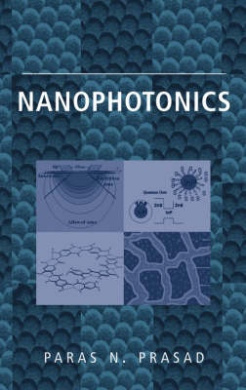
The only comprehensive treatment of nanophotonics currently available Photonics is an all-encompassing optical science and technology which has impacted a diverse range of fields, from information technology to health care. Nanophotonics is photonic science and technology that utilizes light-matter interactions on the nanoscale, where researchers are discovering new phenomena and developing technologies that go well beyond what is possible with conventional photonics and electronics. These new technologies could include efficient solar power generation, high-bandwidth and high-speed communications, high-capacity data storage, and flexible- and high-contrast displays. In addition, nanophotonics will continue to impact biomedical technologies by providing new and powerful diagnostic techniques, as well as light-guided and activated therapies. Nanophotonics provides the only available comprehensive treatment of this exciting, multidisciplinary field, offering a wide range of topics covering: * Foundations * Materials * Applications * Theory * Fabrication Nanophotonics introduces students to important and timely concepts and provides scientists and engineers with a cutting-edge reference. The book is intended for anyone who wishes to learn about light-matter interactions on the nanoscale, as well as applications of photonics for nanotechnology and nanobiotechnology. Written by an acknowledged leader in the field, this text provides an essential resource for those interested in the future of materials science and engineering, nanotechnology, and photonics. PARAS N. PRASAD is the SUNY Distinguished Professor of Chemistry, Physics, Electrical Engineering, and Medicine; the Samuel P. Capen Chair; and the Executive Director of the Institute of Lasers, Photonics, and Biophotonics at the University of Buffalo. Professor Prasad has published over 450 scientific papers and lectured worldwide on nanophotonics. He has offered a multidisciplinary course on nanophotonics at Buffalo as well as a short course on this subject at the SPIE professional society meetings. In May 2001, the U.S. Department of Defense, under its nanotechnology initiative, chose the Institute of Lasers, Photonics, and Biophotonics in Buffalo to lead a comprehensive multidisciplinary program in Nanophotonics involving a world-class consortium of researchers at the University of California at Berkeley, Massachusetts Institute of Technology, the University of Washington, and Yale University. Preface. Acknowledgments. 1. Introduction. 2. Foundations for Nanophotonics. 3. Near-Field Interaction and Microscopy. 4. Quantum-Confined Materials. 5. Plasmonics. 6. Nanocontrol of Excitation Dynamics. 7. Growth and Characterization of Nanomaterials. 8. Nanostructured Molecular Architectures. 9. Photonic Crystals. 10. Nanocomposites. 11. Nanolithography. 12. Biomaterials and Nanophotonics. 13. Nanophotonics for Biotechnology and Nanomedicine. 14. Nanophotonics and the Marketplace. Index.