Description
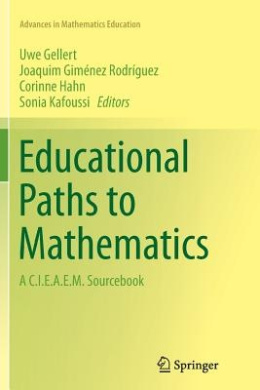
This book offers fresh insight and understanding of the many ways in which children, youth and adults may find their paths to mathematics. The chapters of the volume offer and analyse promising new ways into mathematics. The focus is on spaces and modalities of learning, dialogue and inquiry, embodiment and aesthetic experience, information and communication technology and on the use of mathematics in public communication. The chapters present new mathematical activities and conceptions enriching the repertoire of mathematics education practices. Critical commentaries discuss the innovative potential of the new approaches to the teaching and learning of mathematics. As a consequence, the commentaries point to requirements and open issues in the field of research in mathematics education. The volume is remarkably international. Teachers and researchers from 14 countries authored 21 chapters and 7 commentaries. The reader is invited to reflect on the particular effect of presenting avenues to mathematics contrived in diverse national settings in which the praxis of mathematics education might look different compared to what happens in the reader’s place. The book starts a series of sourcebooks edited by CIEAEM, the Commission Internationale pour l’Etude et l’Amlioration de l’Enseignement des Mathmatiques / International Commission for the Study and Improvement of Mathematics Education. Educational Paths to Mathematics: Which Paths Forward to What Mathematics? Uwe Gellert and Corinne Hahn Part I Cultural Tensions in the Field of Mathematics Education Re-Interpreting Students’ Interest in Mathematics: Youth Culture and Subjectivity Paola Valero Connecting Place and Community to Mathematics Instruction in Rural Schools Robert Klein Establishing Mathematics Classroom Culture: Concealing and Revealing the Rules of the Game Christine Knipping, David Reid and Hauke Straehler-Pohl Part II Working with Adults Learning Mathematics in and out of School: A Workplace Education Perspective Gail E. FitzSimons Mathematical Modelling and Bank Loan Systems: An Experience with Adults Returning to School Vera Helena Giusti de Souza, Rosana Nogueira de Lima, Tnia Maria Mendona Campos and Leonardo Gerardini Working with Adults: A Commentary Javier Dez-Palomar Part III Working with Pre-Schoolers ‘Number in Cultures’ as a Playful Outdoor Activity: Making Space for Critical Mathematics Education in the Early Years Anna Chronaki, Georgia Moutzouri and Kostas Magos Fairness Through Mathematical Problem Solving in Preschool Education Zoi Nikiforidou and Jenny Pange How Do Fair Sharing Tasks Facilitate Young Children’s Access to Fractional Concepts? Julie Cwikla and Jennifer Vonk Working with Pre-Schoolers: A Dual Commentary Michaela Kaslov and Sixto Romero Part IV Taking Spaces and Modalities into Account Digital Mathematical Performances: Creating a Liminal Space for Participation Susan Gerofsky Participation in Mathematics Problem-Solving Through Gestures and Narration Luciana Bazzini and Cristina Sabena Considering the Classroom Space: Towards a Multimodal Analysis of the Pedagogical Discourse Eleni Gana, Charoula Stathopoulou and Petros Chaviaris Commentary: Semiotic Game, Semiotic Resources, Liminal Space–A Revolutionary Moment in Mathematics Education! Peter Appelbaum Part V Criticising Public Discourse Numbers on the Front Page: Mathematics in the News Dimitris Chassapis and Eleni Giannakopoulou On the Role of Inconceivable Magnitude Estimation Problems to Improve Critical Thinking Llus Albarracn and Nria Gorgori Criticizing Public Discourse and Mathematics Education: A Commentary Charoula Stathopoulou Part VI Organising Dialogue and Enquiry Facilitating Deliberate Dialogue in Mathematics Classroom Ana Serrad, Yuly Vanegas and Joaquim Gimnez Inquiry-Based Mathematics Teaching: The Case of Clia Lus Menezes, Hlia Oliveira and Ana Paula Canavarro Using Drama Techniques for Facilitating Democratic Access to Mathematical Ideas for All Learners Panayota Kotarinou and Charoula Stathopoulou Organising Dialogue and Enquiry: A Commentary Lambrecht Spijkerboer and Leonor Santos Part VII Providing Information Technology Educational Laptop Computers Integrated into Mathematics Classrooms Maria Elisabette Brisola Brito Prado and Nielce Meneguelo Lobo da Costa Technology and Education: Frameworks to Think Mathematics Education in the 21st Century Gilles Aldon Technology in the Teaching and Learning of Mathematics in the 21st Century: What Aspects Must Be Considered? A Commentary Fernando Hitt Part VIII Transcending Boundaries Family Math: Doing Mathematics to Increase the Democratic Participation in the Learning Process Javier Dez-Palomar Service-Learning as Teacher Education Peter Appelbaum The Learning and Teaching of Mathematics as an Emergent Property Through Interacting Systems and Interchanging Roles: A Commentary Fragiskos Kalavasis and Corneille Kazadi Themes and Places of the CIEAEM Conferences Presidents of the Commission Internationale pour l’Etude et l’Amlioration de l’Enseignement des Mathmatiques Index